Huygens 21st Anniversary
Celebrating 21 years since humanity's furthest landing.
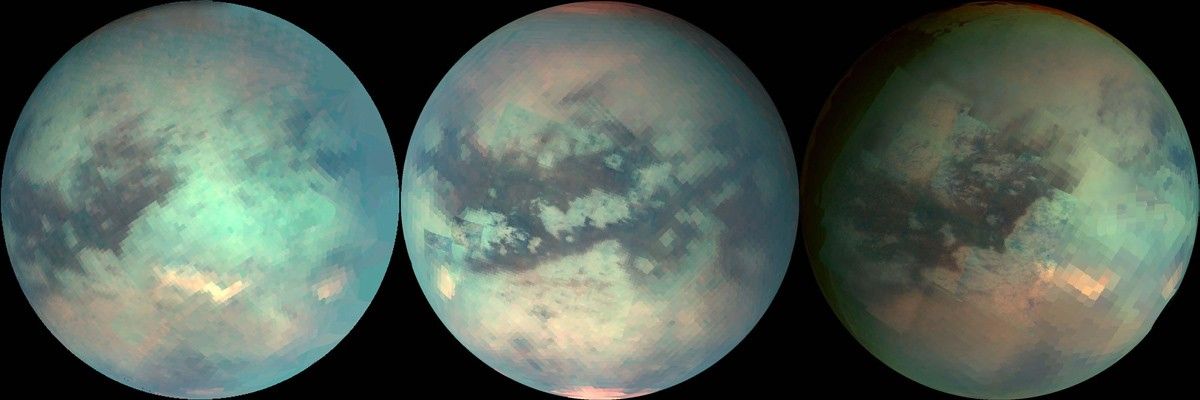
Vorticity's engineers achieved humanity's furthest landing on Titan (moon of Saturn, 1 billion kilometers away), in cryogenic temperatures, after a 7 year flight. Last month, we celebrated it's 21st anniversary.
Titan is soaked in deadly radiation, and in a thick opaque atmosphere of previously unknown composition. The parachute system was one of the most critical sub-systems on the mission.
Dr Steve Lingard, our director, was the programme manager for the system. The parachutes successfully decelerated from 22,000 km/h, seeing Titan entry temperatures of 12,000 degrees Celcius, with winds on Titan reaching up to 250 km/h.
Huygens overall design
The Huygens probe comprised a Descent Module cocooned within a front shield and a back cover. Weighing 320 kg, the probe was protected by the shield and cover from the harsh temperature and radiation extremes of space during its seven-year journey to Saturn, and from the heat of entry into Titan’s atmosphere (about 12,000°C) as it decelerated from a speed of more than 22,000 km/hr.
The Descent Module itself contains a complex assembly of engineering and scientific equipment on two platforms. The 2.7 m diameter front shield weighed 88 kg and comprised a CFRP (carbon fibre-reinforced plastic) honeycomb shell to which tiles were attached made of AQ60 ablative material – a felt of silica fibres reinforced by phenolic resin. The 21 kg back cover was a stiffened aluminium shell protected by Prosial (a layer of small silica spheres sprayed on), containing a breakout patch, and a door for late access during integration. Rod cutters to release the shield and cover were included in the separation assembly that provided the attachment points to the Cassini orbiter.
The descent control sub-system
Three minutes after reaching the top of Titan’s atmosphere the probe had decelerated to 1,400 km/hr at an altitude of 160 km above the surface. Here accelerometers alerted the flight software that it was time for Huygens to start work and the descent control sub-system (DCSS) took over. The DCSS is the series of parachutes and associated mechanisms which brought the Huygens probe down softly to the surface of Titan.
First, a mortar attached to the rear of the probe was fired. This punched through a breakout patch in the back cover and deployed a 2.6 m diameter pilot chute. Two and a half seconds later the back cover was released and the pilot chute pulled it away from the probe, in turn deploying the 8.3 m diameter main parachute. The main parachute inflated, and stabilised and decelerated the probe. It was essential that the parachute system was in control above Mach 1.3 since the probe becomes aerodynamically unstable at transonic velocity and would tumble. After 30 seconds, when the probe had decelerated below Mach 0.5, the front shield was released and fell away.
It would take the probe six hours to reach the surface descending on the large main parachute by which time the batteries would have been drained. Therefore three pyrotechnic parachute jettison mechanisms detached the main parachute bridle from the probe after 15 minutes. The separating main parachute deployed a 3 m diameter stabilising drogue (smaller parachute), sized to achieve the required descent time of two hours.
During the final descent to the surface under the stabilising drogue, Huygen’s stability was critical. The probe attitude had to be maintained at less than 10 degrees to the vertical in order to avoid loss of the radio link, and pitch rate had to be less than 6 degrees per second to prevent blurring of the images produced by the onboard camera. This is a difficult problem as the winds on Titan may reach 250 km/h. The drogue was therefore attached to the probe by a carefully optimised three-leg bridle designed to provide maximum stability and minimum gust response. Additionally, during the descent, the probe had to rotate slowly at a defined rate to permit the camera to build up pictures of Titan’s clouds and the planet’s surface. A very low friction swivel was incorporated in the drogue bridle to prevent random parachute rotation from modifying the critical probe spin rate.
High Mach, low pressure
The descent control sub-system was one of the most critical sub-systems for the probe since its failure would have resulted in complete loss of mission. The parachutes were required to meet very different requirements to those normally experienced on Earth. The pilot and main parachutes had to inflate at supersonic Mach number but very low dynamic pressure. The designs selected had also to be compatible with the rigorous stability requirements for the probe.
Additionally, the textile materials had to undergo strict cleansing procedures, long term vacuum storage, cryogenic temperatures, radiation and a 14- year lifetime without significant degradation. Prediction of parachute behaviour in a terrestrial environment is still in its infancy. Extrapolation to an extra-terrestrial atmosphere and 1/7 Earth gravity necessitated the development of new computer simulations of parachutes. During the seven-year voyage to Titan the subsystem components were dormant and were exposed to space vacuum (10-9 torr: torr is a non-SI unit of pressure where 1 torr ~ 133 pascals = 1.33 millibar), radiation (105 rads) and temperature fluctuations between -40°C and +30°C. On Titan the mechanisms that sequence the parachutes are exposed to a temperature of -180°C to -200°C, as if plunged into liquid nitrogen. They then had to function first time or the mission would have been lost.
The pyrotechnics had to be entirely hermetically sealed, dual redundant and designed to be insensitive to the mission environment. Even a simple swivel became a complex piece of precision engineering to meet the demands of Titan: grease would freeze solid, so only dry lubricants could be used.
Extensive testing in wind tunnels and at full scale, culminating in a drop test from 40 km altitude in Sweden provided confidence that the descent control sub-system would work well, and so it proved.
The Huygens mission was completed successfully with the receipt on Earth of extensive measurements of the properties of its atmosphere plus hundreds of images and measurements of Titan’s surface. All systems onboard the probe appear to have worked at or above their specified levels.
The experience developed on Huygens was used again in the late 1990s to design and develop parts of the UK’s Mars probe, Beagle 2. Further missions to Mars and other solar system bodies are now being planned, and the Huygens engineering and management experience will be an essential part of their success.
Conclusion
Huygens was designed and developed for the European Space Agency (ESA) by a consortium of about 20 mainly European companies under the prime-contractorship of Alcatel Space. The Particle Physics and Astronomy Research Council (PPARC) organised the UK scientific involvement in the mission and provided the UK's share of ESA's funding. The main UK industry involvement comprised:
LogicaCMG: flight software
IGG: parts procurement
Irvin: parachute manufacture
Martin-Baker: descent control sub-system (responsibility later transferred to Vorticity Ltd)
Three minutes after reaching the top of Titan’s atmosphere the probe had decelerated to 1,400 km/hr at an altitude of 160 km above the surface. Here accelerometers alerted the flight software that it was time for Huygens to start work and the descent control sub-system (DCSS) took over.
This heritage is the baseline experience required to deliver our work, whether we’re solving complex fluid dynamics, developing precision landing systems, or designing for reliability in extreme conditions.