Huygens Descent Control Sub-System
The engineering behind the farthest landing ever made by humanity

The Huygens probe was the European contribution to the joint NASA-ESA mission to Saturn and its moons. This focused on the exploration of Titan, the largest moon of Saturn. This investigated the atmospheric composition and surface characteristics of Titan, Saturn’s largest moon. Titan is unique in the solar system in that it is the only moon with a significant atmosphere. At the moon’s surface, atmospheric density reaches approximately five times the air density at Earth’s surface.
Reconstruction of Huygen's images sent from Titan, showing parachute shadow on Titan!
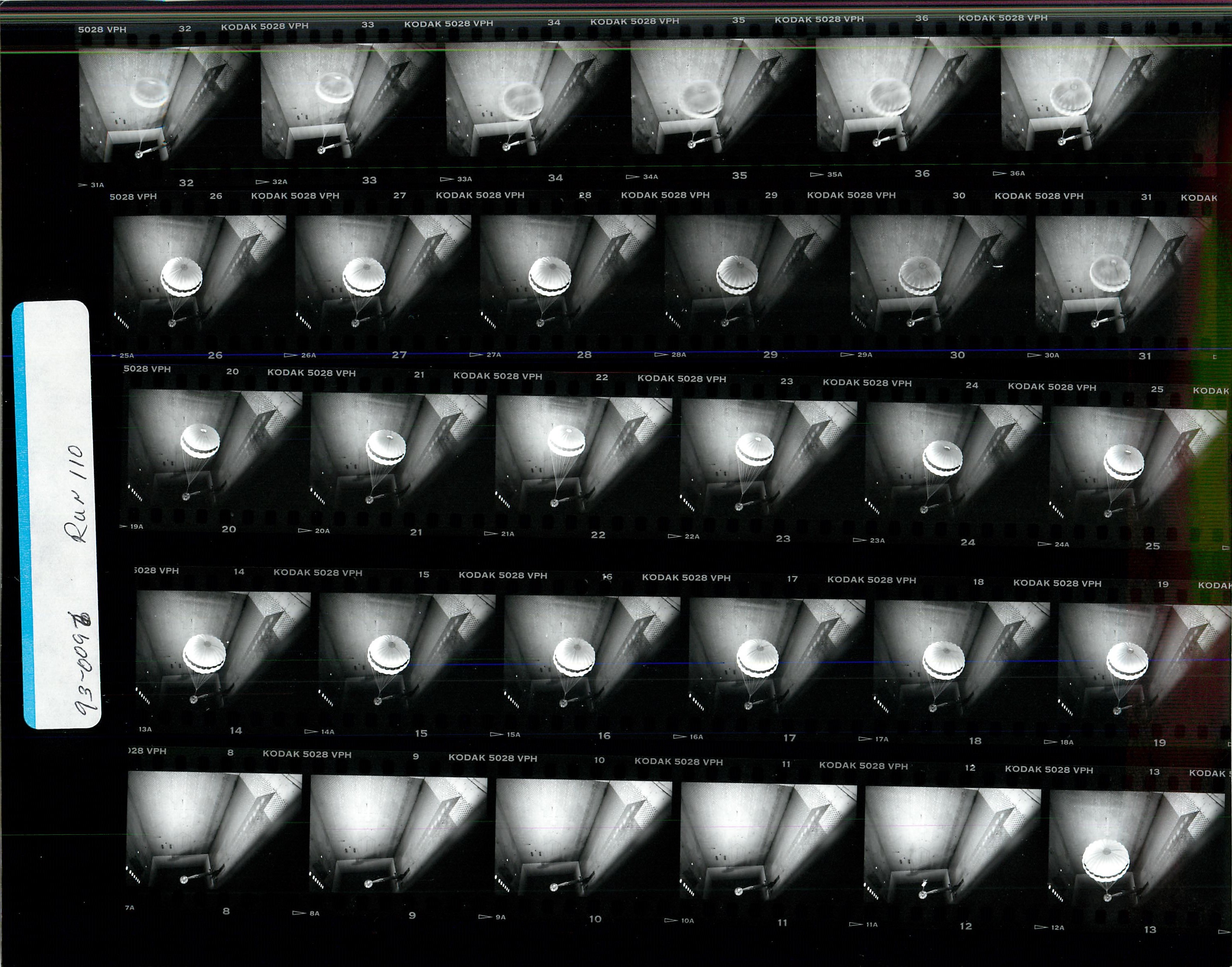
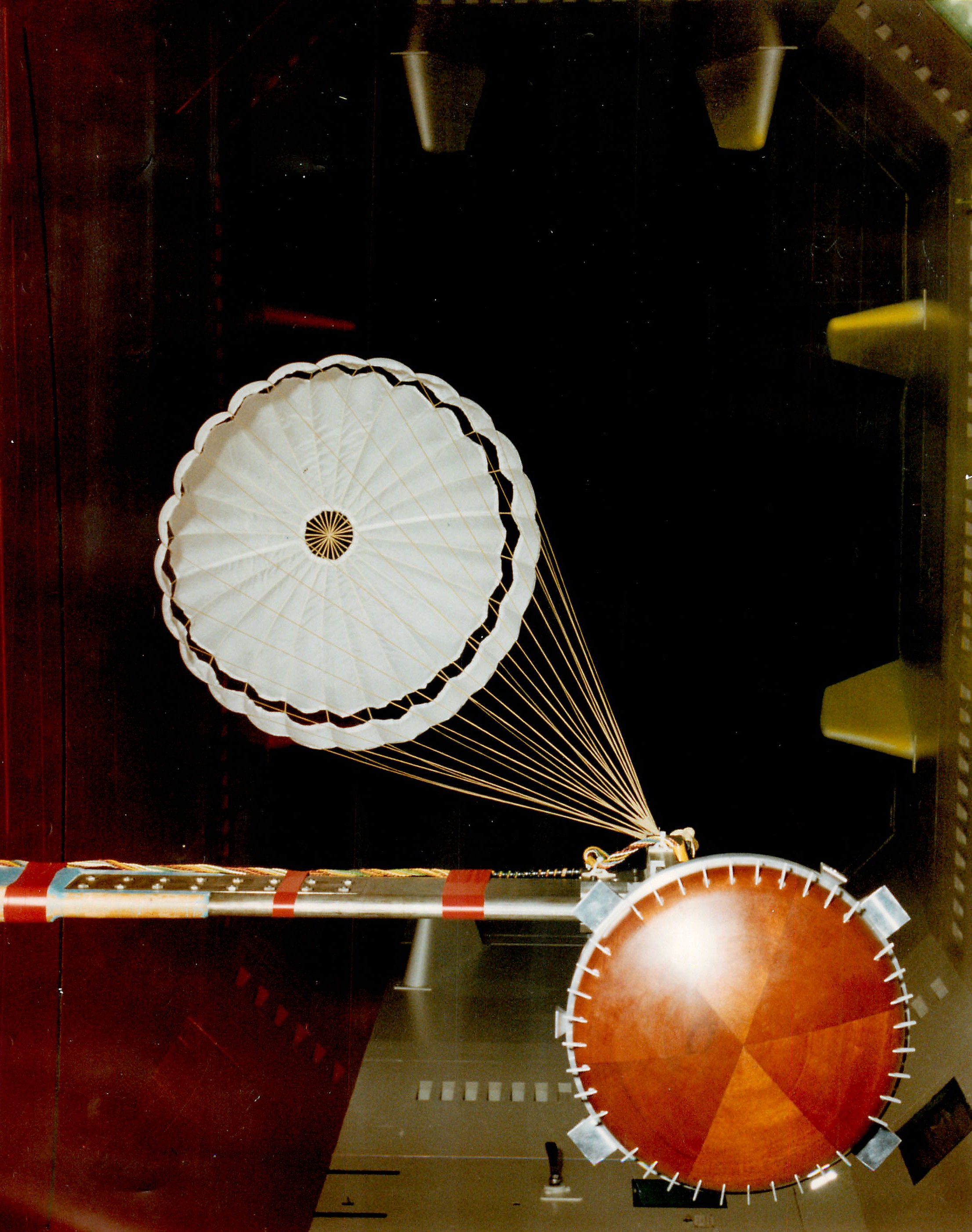
Huygens wind tunnel testing
The significance of the Huygens mission stems from studies which indicated that the frozen moon harbours gaseous and liquid hydrocarbons in a predominantly nitrogen atmosphere. This is thought to be just like the conditions that prevailed in the early Earth atmosphere before bacteria appeared. Titan is far too cold for life and therefore this primordial soup has been slow to evolve. Titan is revealing to scientists what complex carbon molecules the action of the Sun’s rays can produce from simple gases.
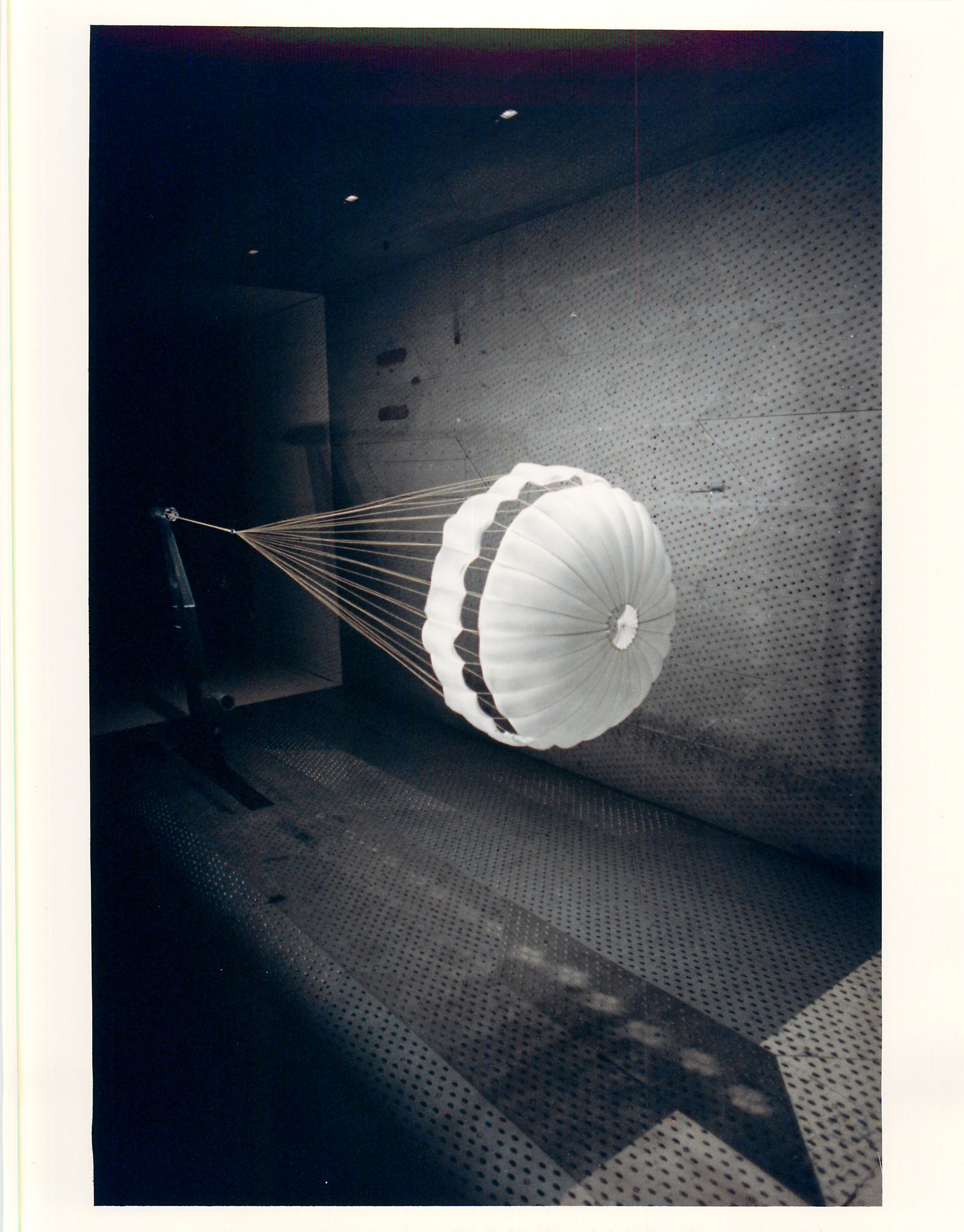
Huygens parachute in the wind tunnel
ESA required the development of a parachute system that would safely take the Huygens probe safely through a near cryogenic atmosphere to the surface of Titan. The overall descent time was critical to ensure continuous communication, battery survival and descent stability to allow the onboard experiments, in particular, the imaging system, to function correctly.
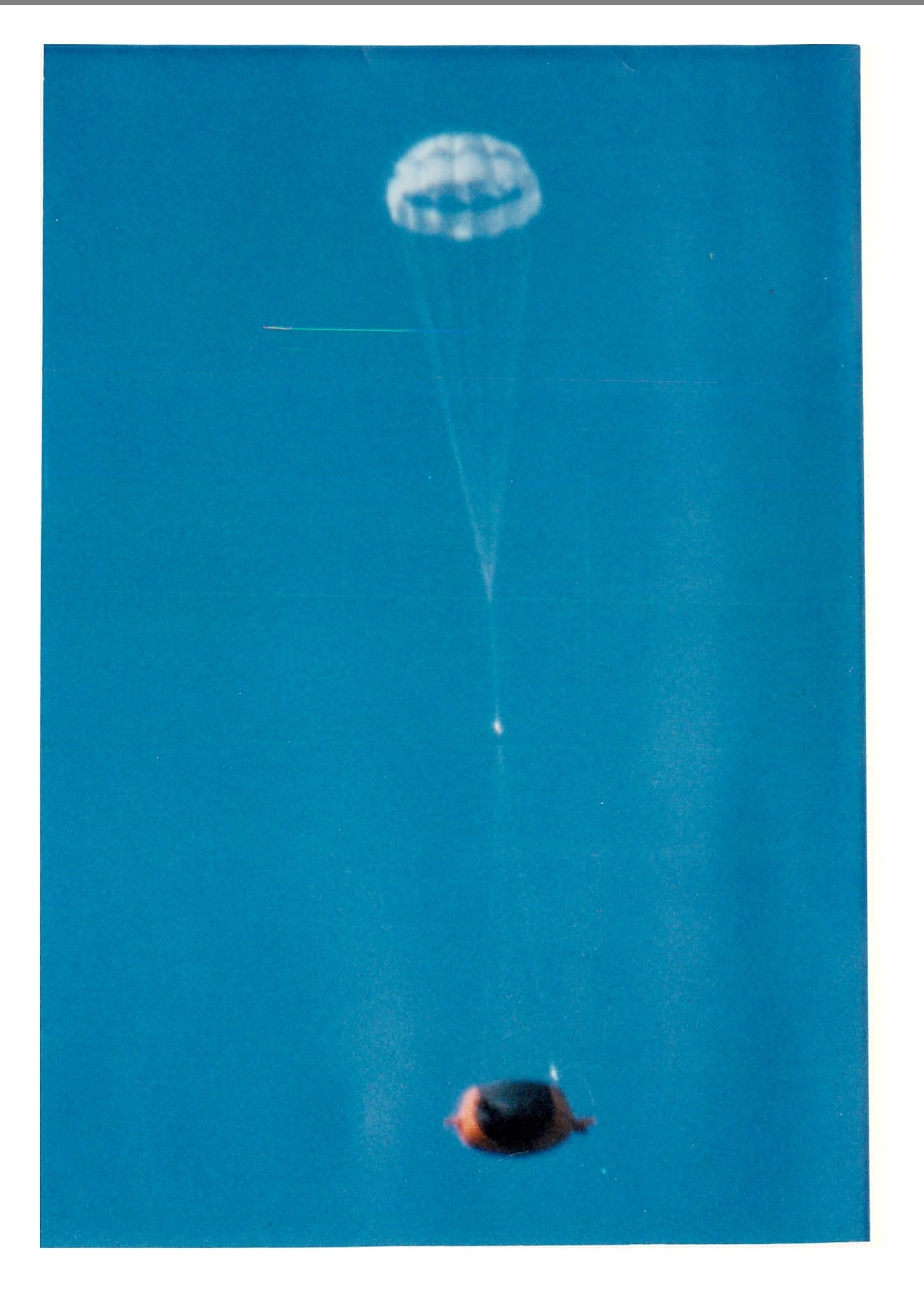
Huygens drop test
Members of the Vorticity team were responsible for the delivery of the Huygens Descent Control Sub-System (DCSS), the three-stage parachute system that decelerated and controlled the descent of the Huygens probe through the Titan’s atmosphere. This was a leading mission for Vorticity enabling our team to deepen their expert knowledge of parachute system analysis, design and verification. Our team were responsible for the design and qualification of the parachutes, deployment mortar, inter-stage pyrotechnic release mechanisms, swivels, and parachute packing and containment system.
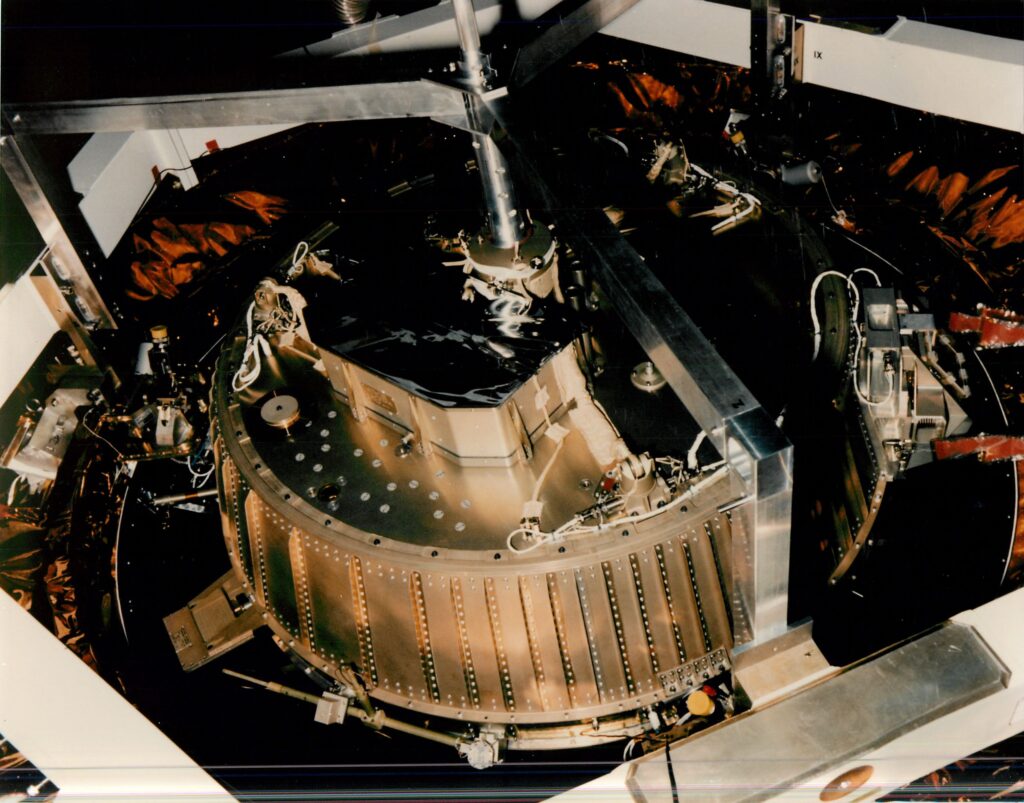
The Huygens lander, showing the parachute container and mortar on the centre of the rear face of the spacecraft
Following a number of revisions to the Titan entry trajectories and atmosphere models, the Vorticity team conducted an extensive analysis of the parachute system to confirm its compatibility with the new conditions. As part of the programme, the Vorticity team produced:
Monte Carlo entry simulations to derive revised parachute system initiation dispersions
Review of parachute deployment and inflation load predictions and stressing
Parachute structural testing to confirm structural margins
Descent trajectory modelling, simulation of transonic stability including deriving revised values of pitch damping derivatives for the probe using FSI
12 DOF system stability modelling and gust response, and released item re-contact predictions