


Mastering Parachute Loading
Advancing the understanding of parachute inflation loads, their distribution around a parachute canopy and methods of achieving appropriate loads in parachute tests.
The objective of the programme was to advance the understanding of parachute inflation loads, their distribution around a parachute canopy and methods of achieving appropriate loads in parachute tests. The work was broken up into three domains: experimental measurement of load asymmetry during parachute inflation, computational simulation of load asymmetry during parachute inflation and development of a new algorithm to improve the targeting accuracy in drop tests to achieve the desired inflation load.
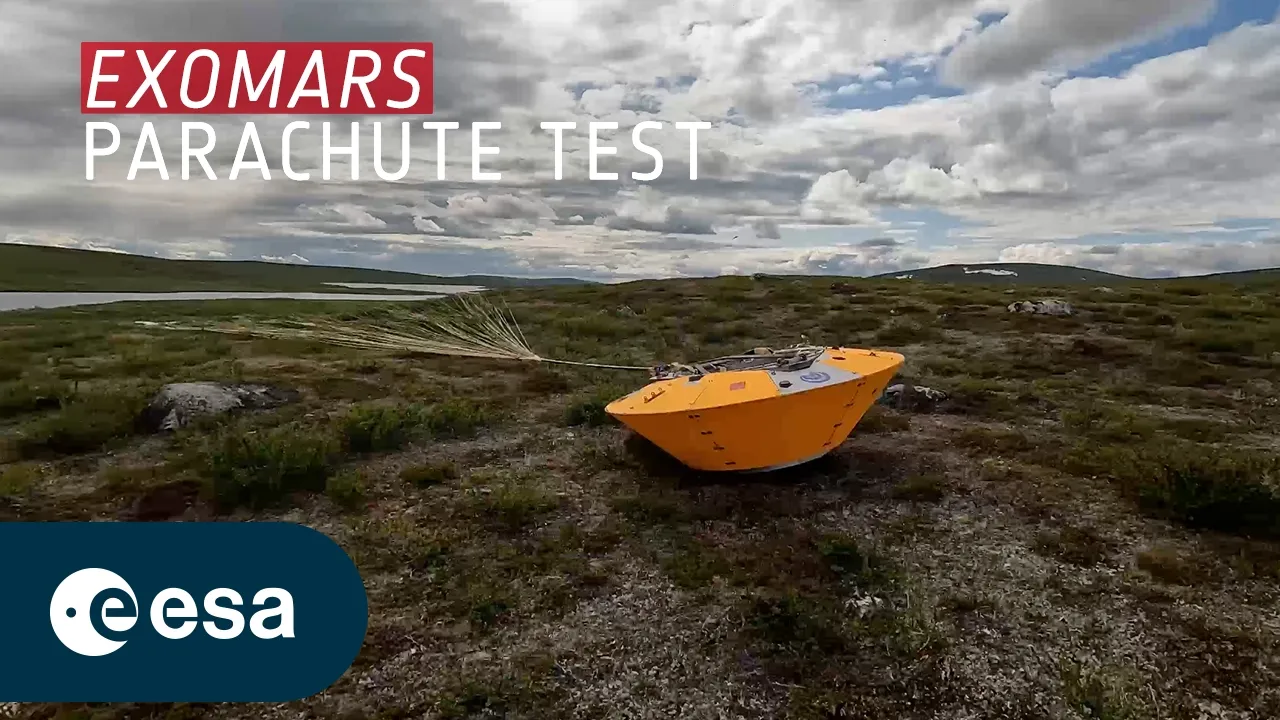
The experimental measurement was accomplished by means of low altitude drop tests of an instrumented parachute from a helicopter. Lightweight line tensometers were developed which could be fitted to the suspension lines of a parachute without the need for invasive modifications of the lines. The tension in each line was then measured at high frequency throughout the inflation process.
Low-altitude drop test
The computational simulation was performed using a coupled Fluid Structure Interaction (FSI) solver, allowing modelling of flexible bodies within a conventional CFD grid. Reconstruction simulations of the test were performed, allowing a separate prediction of the asymmetry between the parachute line loads during inflation.

Fluid Structure Interaction inflation model
Finally, a new algorithm was derived which provides significant improvements in targeting inflation loads for drop tests, correcting for off-nominal release conditions (altitude and velocity) and atmosphere. This was used successfully in the final drop test of the ExoMars RFM parachute system.
Vorticity has published several papers on this project, they can be found in our Publications list.
This work was funded by the European Space Agency.