Computational Analysis
Vorticity has the capability in Computational Fluid Dynamics and Fluid-Structure Interaction simulation necessary to develop aerodynamic databases of complex objects.
// KEY CAPABILITIES
Optimised mesh generation in Pointwise
Structured, unstructured and overset meshes
Computational Fluid Dynamics (CFD) in CFD++ and SU2
Subsonic to hypersonic continuum flow
Steady RANS and time-accurate transient hybrid RANS-LES turbulence modelling
High-temperature multi-species aerochemistry and combustion
Surface pressure, friction and heat flux load prediction
Finite Element Analysis (FEA) and Fluid–Structure Interaction (FSI) in LS-DYNA
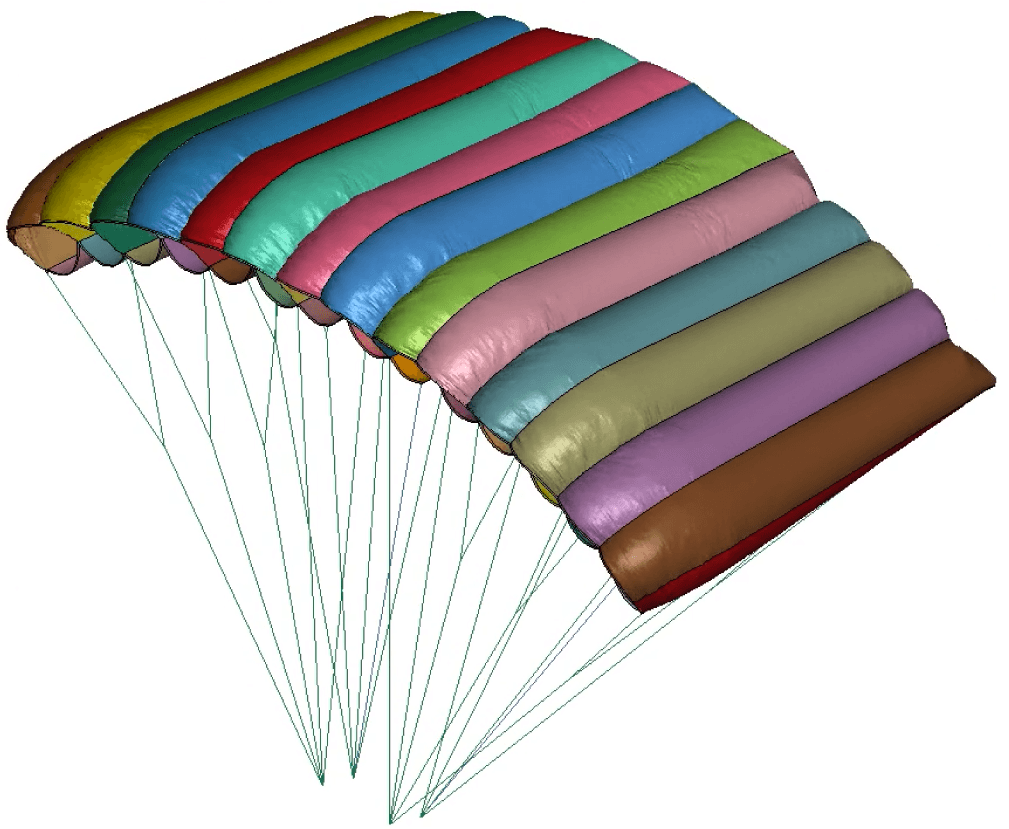
Flexible inflatable and parachute simulations
Material behaviour (stress, strain and thermal analyses)
Engine plume modelling with thermochemical effects
Enabling accurate assessment of plume-induced flow separation and base region interactions
Direct Simulation Monte Carlo (DSMC) of rarefied flows
Parallel post-processing and GPU-rendering in ParaView and Python
Two onsite high-performance computing clusters for rapid case solution
160 CPU cores and over 2.5 TB of RAM.
Rigorous simulation quality procedures
// LAUNCH VEHICLE SIMULATION
Vorticity offers advanced simulation capabilities to support launch vehicle development, focusing on both ascent and re-entry aerothermodynamics. Our expertise includes detailed modelling of rocket engine plume chemistry, unsteady flow analysis, and radiative heating around the vehicle base. We also provide comprehensive flight dynamics and trajectory modelling for the re-entry phase, including the use of retro-propulsion and stabilisation systems.
Using well-validated CFD codes, Vorticity builds high-fidelity aerothermodynamic databases for both ascent and re-entry, across all flight regimes. Our simulations accurately capture the complex dynamics of vehicle flight, ensuring performance optimisation from launch to landing. Vorticity has provided expert consultancy to launch vehicle developer primes on previous ESA FLPP activities.
All of Vorticity’s simulation work adheres to strict quality control processes in line with the ISO 9001 standard. We also follow the NAFEMS Engineering Simulation Quality Management Standard (ESQMS), ensuring that our simulations are accurate and reliable. From modelling to final result release, our internal quality procedures guarantee that the simulation outcomes are of the highest standard, supporting safe and effective vehicle development.
// KEY CASE STUDY - EXOMARS
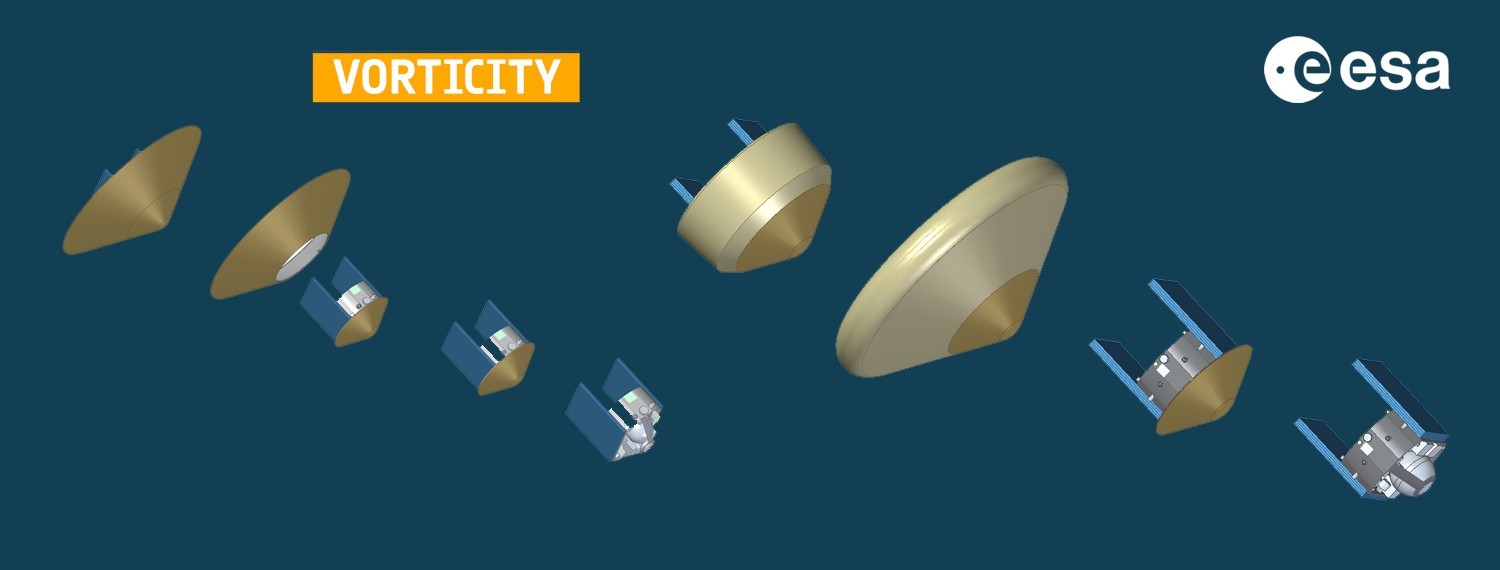
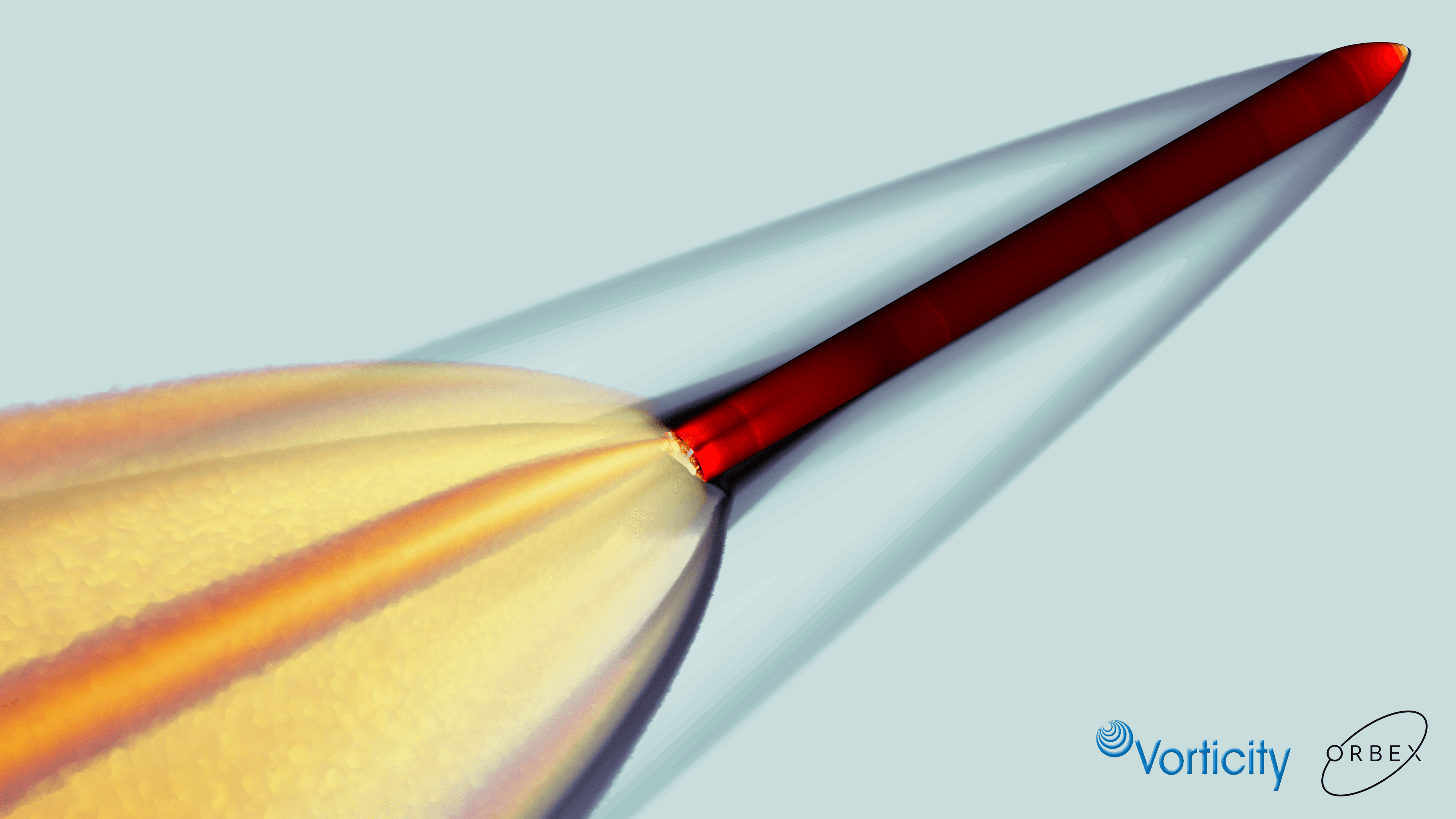
Vorticity completed an extensive series of CFD simulations of the ESA Rosalind Franklin Mission entry vehicle. Multi-body overset meshes and hybrid RANS-LES turbulence models were used for time-accurate simulation of the massively-separated wake flow. The interaction between the entry vehicle wake and its parachute assembly was successfully simulated in both subsonic and supersonic flow.
Vorticity used these results to improve the modelling of supersonic parachute deployment in blunt aeroshell wakes. This is critical for successful parachute system design, as the loss of dynamic pressure in asymmetric wakes can strongly affect parachute drag and deployment dynamics.
// KEY CASE STUDY - SUPERSONIC PARACHUTES
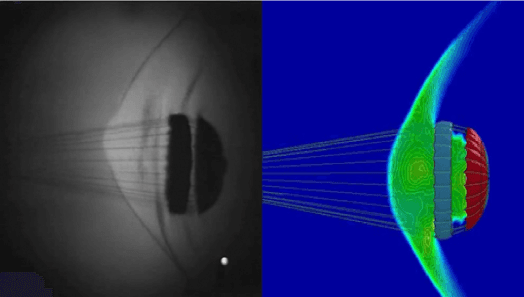
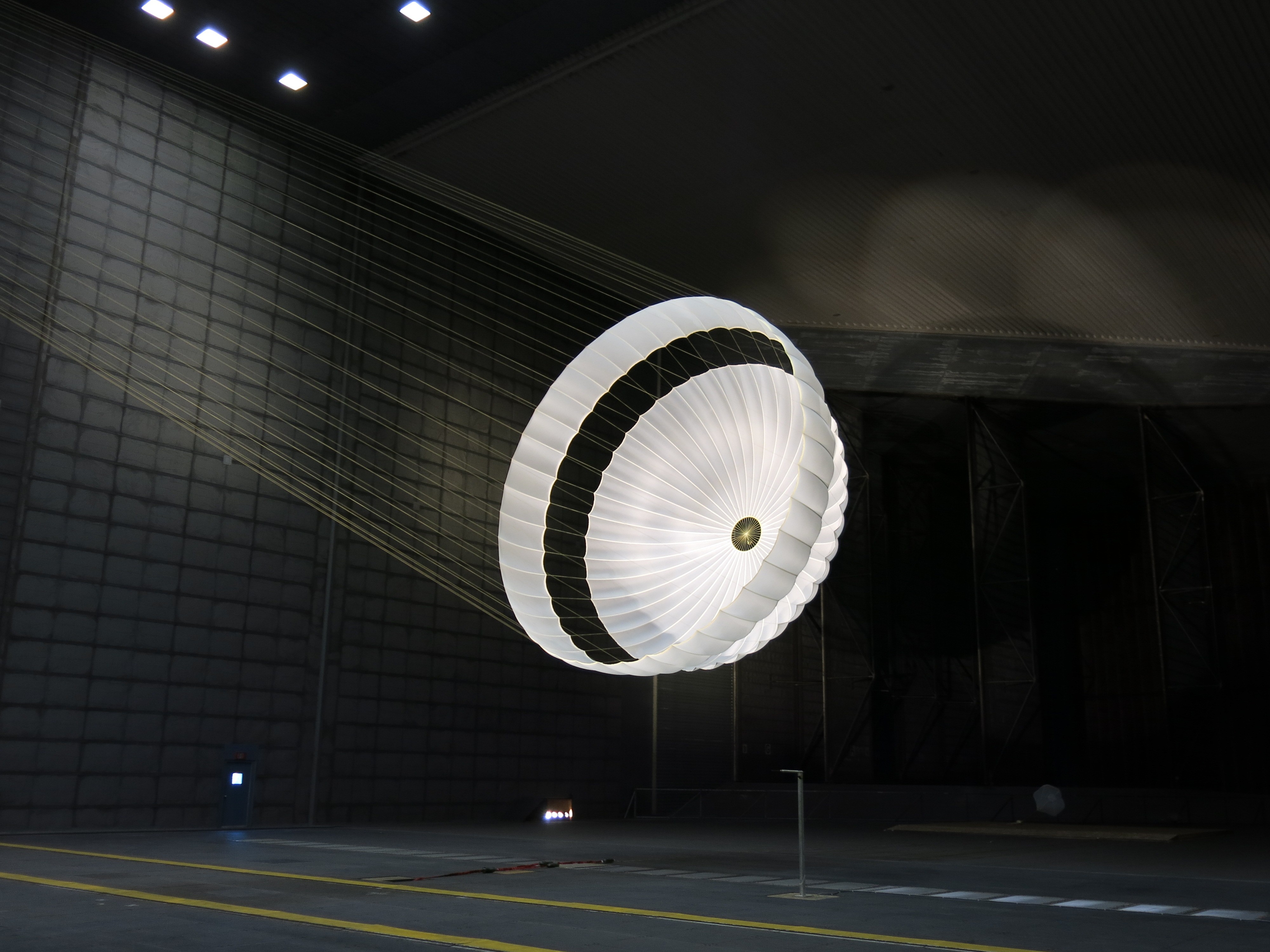
Vorticity designed and tested several subscale parachutes in the NRC 1.5 m Trisonic Wind Tunnel in Ottawa, Canada. The parachutes were deployed at Mach numbers between 1.6 and 2.25, to explore the behaviour of supersonic parachutes in Mars-representative conditions.
Vorticity used the Fluid–Structure Interaction capabilities of LS-DYNA to complete numerical rebuilds, deepening understanding of the flow phenomena and parachute performance. The FSI simulation showed the same complex interaction between supersonic bow shock and flexible parachute canopy seen in wind-tunnel testing.